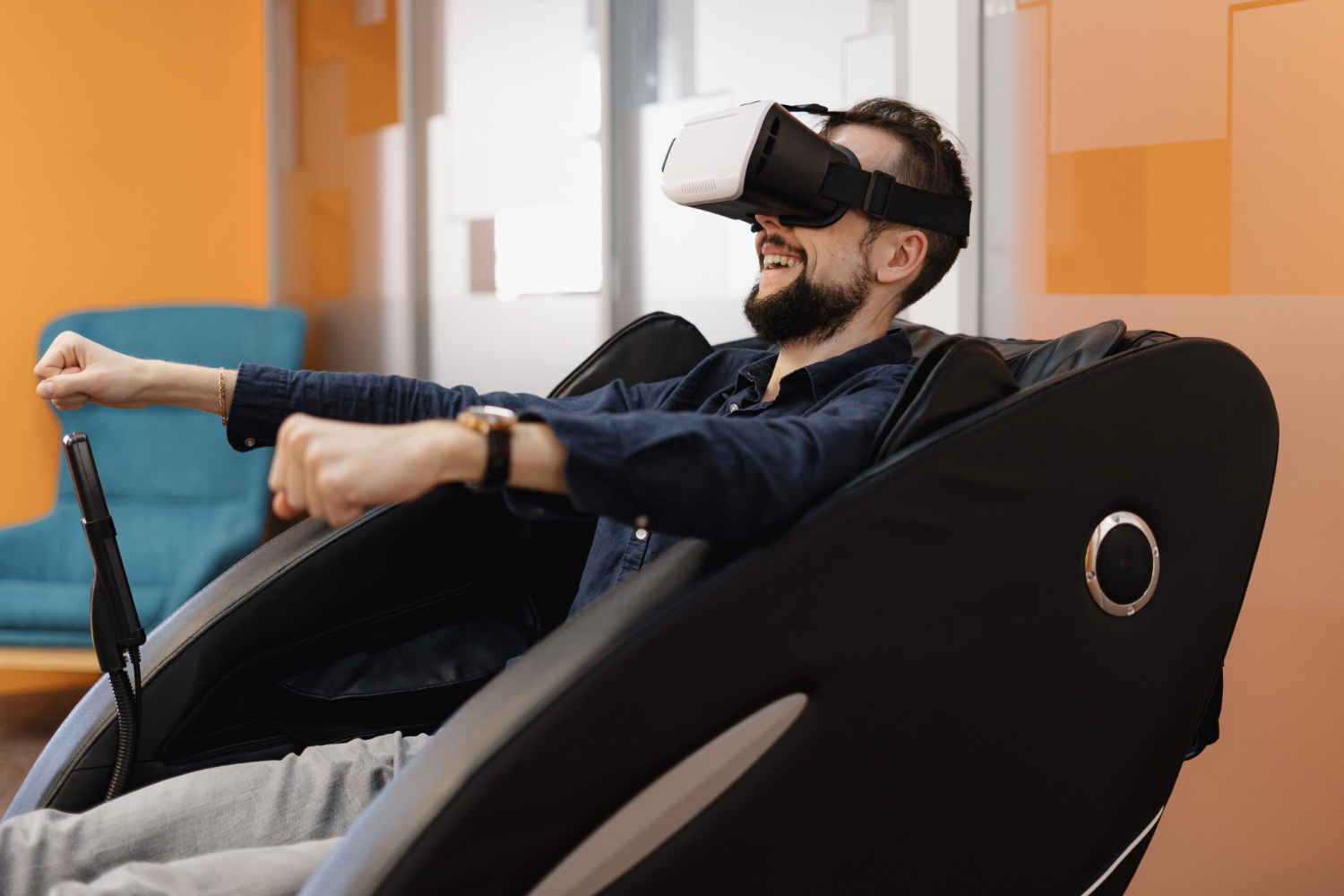
When most people hear the word “simulator,” they think of beginners learning to steer in a safe environment. That’s only half the story.
Simulators have become powerful tools for licensed drivers too—for refining advanced skills, recovering from accidents, and preparing for conditions that can’t be safely replicated on real roads. This blog explores how simulator training serves drivers at every stage of their journey.
The Evolution of Driving Simulation
Modern driving simulators are nothing like the basic units used in the 1990s. Today’s systems offer accurate physics, realistic weather effects, and detailed traffic scenarios that mirror real driving conditions in places like Edmonton, Stony Plain, and Spruce Grove.
What makes them genuinely useful for training isn’t the visual realism—it’s the ability to repeat dangerous scenarios safely until the correct response becomes automatic.
Simulator Training for Licensed Drivers
Licensed drivers can use simulators to address specific weaknesses without taking real-world risks. A driver who struggles with highway merging can practice that exact skill dozens of times in a single session. A driver who avoids highways out of anxiety can build confidence gradually.
Defensive driving scenarios—black ice, sudden braking, wildlife crossings—can be experienced in the simulator without any actual danger. The learning sticks because the body and mind respond as if the situation were real.
Recovery After an Accident
Drivers who have been in serious accidents often develop lasting anxiety about getting back behind the wheel. The simulator offers a bridge—a way to practice driving without the risk of another incident.
Many of our students recovering from accidents start with simulator sessions before progressing to dual-control vehicles and eventually back to solo driving. The graduated approach restores confidence without forcing the student to confront fear all at once.
Specialized Skill Development
1. Hazard Perception: Simulators expose drivers to scenarios in compressed time. An hour in the simulator can include more hazards than a week of normal driving.
2. Decision-Making Under Pressure: Time-pressured scenarios train the brain to make smart choices quickly, which translates directly to real-world driving.
3. Adverse Weather: Practicing on simulated black ice or in heavy fog builds skills that can’t safely be developed on real roads.
4. Distraction Management: Simulators can introduce distractions in a controlled way, teaching drivers to maintain focus under conditions that mirror everyday challenges.
Simulator Training for Older Drivers
Older drivers benefit from simulators too. As driving needs change with age, a simulator allows drivers to evaluate their own skills privately, work on areas of weakness, and decide for themselves how to adjust their driving habits.
The privacy of simulator training matters here. There’s no judgment, no examiner, no other drivers watching. Just the chance to assess your own ability and build the skills that need work.
How AJ Driving School Integrates Simulators
Our simulators are part of a layered training approach. New students start with simulator sessions before in-car lessons. Returning students use simulators to refine specific skills. Drivers recovering from accidents use them as a confidence-building tool.
The result is a training program that meets each student where they are, with no wasted hours and no unnecessary risk.
Simulator training is a tool for every stage of a driver’s life, not just the beginning. To explore simulator-based training options in Edmonton, Stony Plain, or Spruce Grove, contact AJ Driving School at (780) 486 5090.


