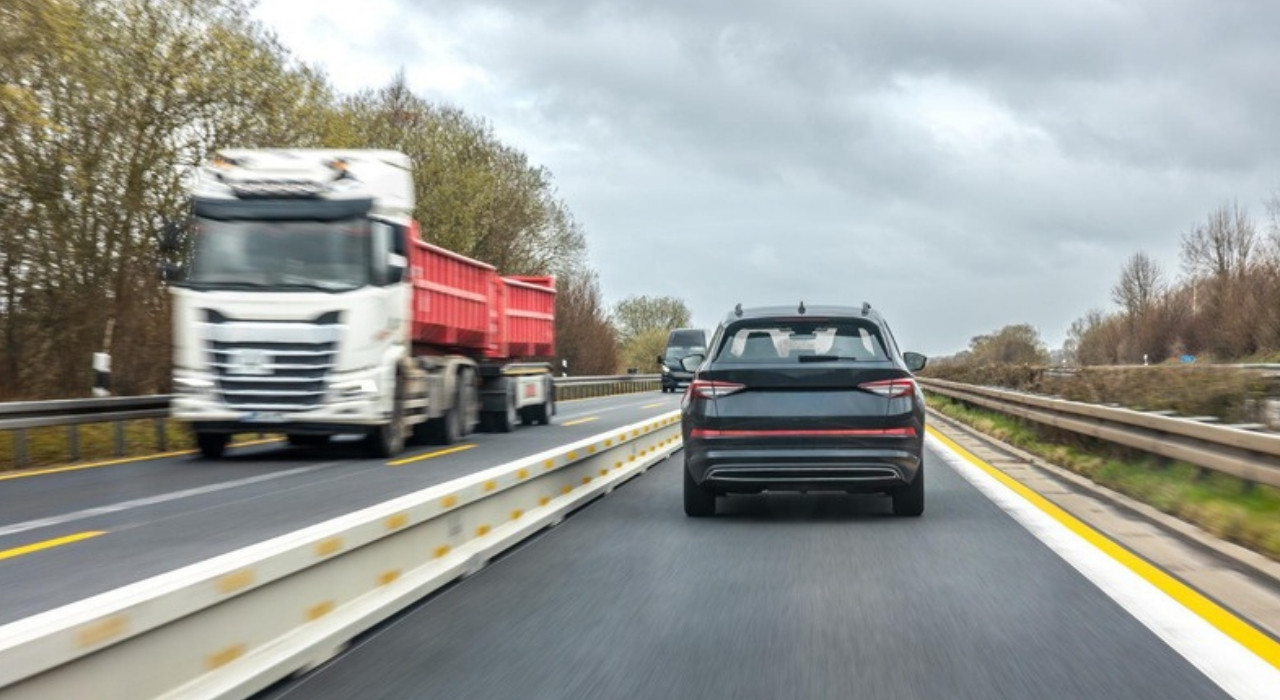
With Alberta’s Industrial Heartland at its doorstep, Fort Saskatchewan sees constant heavy truck traffic on Highway 21, Highway 15, and local roads. This blog teaches the specific skills every local driver needs to share the road safely with commercial vehicles.
Why Truck Traffic Defines Local Driving
The industrial corridor northeast of Fort Saskatchewan generates continuous commercial traffic—tankers, flatbeds, and oversized loads moving to and from facilities at all hours. Shift changes add waves of worker traffic to the mix.
Drivers who understand how trucks operate move through this environment smoothly. Drivers who treat trucks like big cars create the close calls.
Understanding Truck Blind Spots
Large trucks have massive blind spots—directly behind, along both sides (worse on the right), and immediately in front of the cab. The rule of thumb: if you can’t see the driver’s face in their mirror, they cannot see you.
Never linger beside a truck. Pass decisively on the left, complete the pass, and don’t merge back until you can see the truck’s entire front end in your mirror.
Stopping Distances and Following Behaviour
1. Never Cut In Front: A loaded truck can need twice your stopping distance. Cutting in and braking is the single most dangerous move around commercial vehicles.
2. Back Off When Following: Following a truck closely blinds you to everything ahead. Drop back until you can see the road past it.
3. Expect Wide Turns: Trucks swing wide on right turns and may occupy two lanes. Never slide into the gap beside a turning truck.
Highway 21 and Highway 15 Skills
These corridors combine higher speeds with heavy commercial flow and significant intersection traffic. Passing decisions demand honesty: a loaded truck takes a long time to pass, so you need genuine clear distance, not hope.
In winter, truck spray coats windshields instantly. Keep washer fluid topped with winter-rated formula and increase all margins—trucks create their own weather in snow.
Intersections and Rail Crossings
Industrial traffic means rail traffic. Fort Saskatchewan drivers cross tracks regularly, and the rules are absolute: never stop on tracks, never race a signal, and leave full clearance beyond the crossing before entering it in congestion.
At industrial intersections, expect trucks to accelerate slowly from stops. Gaps that look adequate for a car aren’t adequate for a truck pulling into traffic—give them the time they need rather than crowding.
Local Training in Fort Saskatchewan
AJ Driving School’s Fort Saskatchewan lessons include real experience alongside commercial traffic—because that’s what local driving actually involves. Students learn truck awareness as a core skill, not an afterthought.
Graduates drive Highway 21 with the calm that comes from understanding exactly how to position themselves around heavy vehicles.
Trucks are part of Fort Saskatchewan’s roads and economy. Learn to share the road properly, and they become predictable partners in traffic. To book driving lessons in Fort Saskatchewan, contact AJ Driving School at (780) 486 5090.


